

FREE RESEARCH PAPER
Achieving accurate refraction with handheld autorefractors
Nearly a billion people globally suffer poor vision—and many of those could see clearly with readily accessible eyeglasses. But refracting everyone to get the right prescription is a huge challenge.
Download this free research paper from PLOS One, "Comparing low-cost handheld autorefractors: A practical approach to measuring refraction in low-resource settings," and learn how new portable autorefractors are closing this gap.
The research, conducted in Bangalore India independently of PlenOptika, was performed by vision and public health experts from the Harvard T.H. Chan School of Public Health, Yale University School of Medicine, Harvard University Graduate School of Education, and Sankara Academy of Vision.
•
“[QuickSee’s] robust construction is an advantage in rural areas and extreme weather conditions, and is also an affordable option for large-scale studies.”
•
Key findings:
- Refractive error can be accurately measured using affordable and handheld devices
- Pre-production QuickSee prototype outperformed Retinomax and Netra portable autorefractors
- QuickSee was found most accurate compared to subjective refraction, and suitable for epidemiological screening and as a diagnostic tool
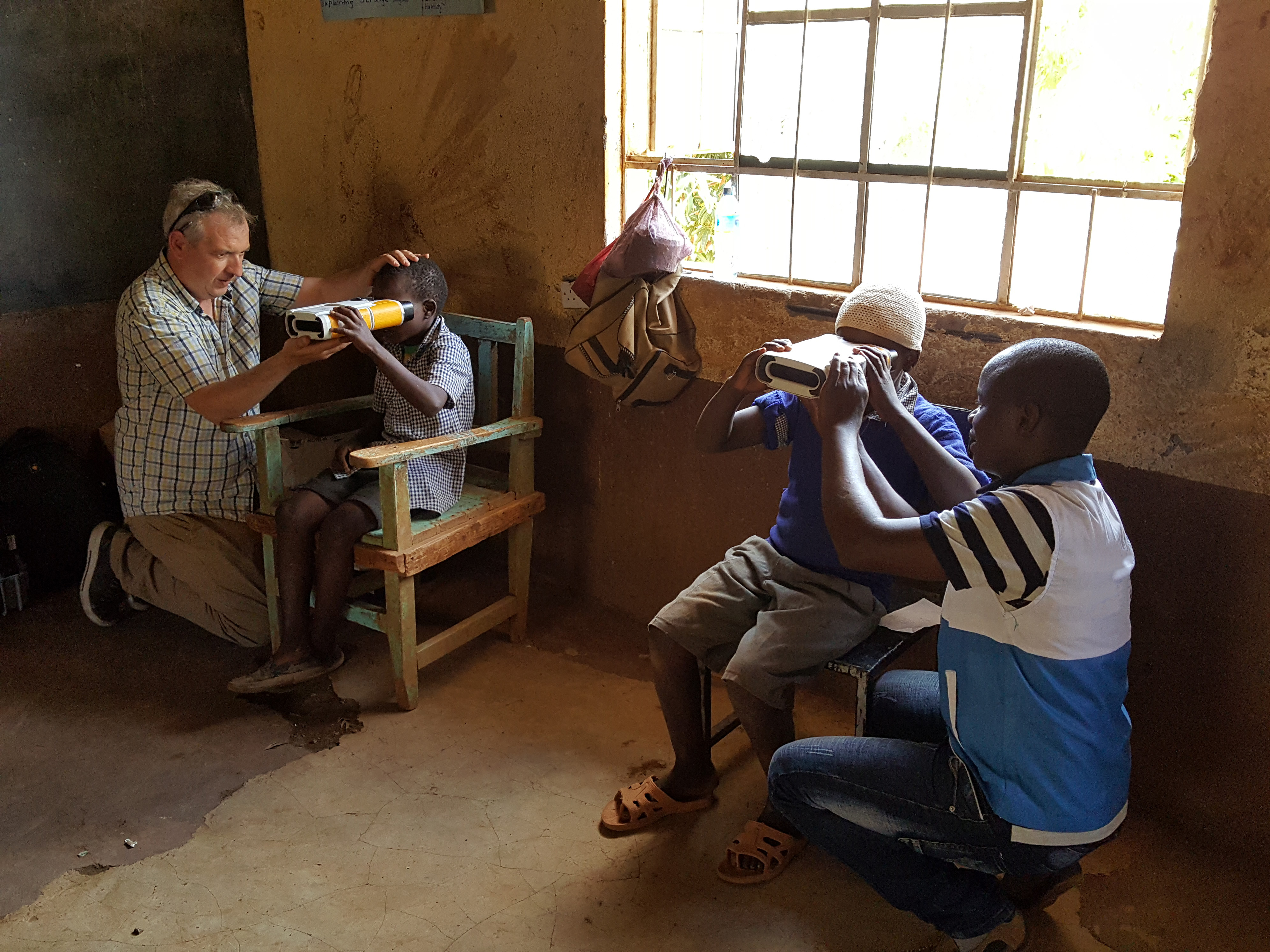
Above: Pediatric vision mission using QuickSee in rural Kenya.